
VGI for Crisis Mapping

Third and final day of the small gathering (hosted by ESRI) to talk about VGI. Last formal talk, by Anahi Ayala Iacucci, on the work of Ushahidi and Crisis Mappers, was inspiring to many. It was gratifying to see how much (relative) progress has been done on coordination of vital grassroots efforts.

I wasn’t nearly as familiar with this work as I could have been, and I’ve lost track of the current status of the GISCorps too, since the 2006-2007 project I did with them for the Medical Mission Exchange.

It doesn’t take much for me to question the value of my knowledge as it’s currently applied in my regular work, compared to what I could be doing. Will be working to merge these better! First step – will organize a student opportunity to contribute some work to Open Street Map this spring.
Understanding VGI for Emergency Management

Day 1 of the Redlands GIS Week, and the topic of the year is Volunteered Geographic Information (VGI), especially as it’s relevant for time-sensitive situations. Like emergencies. For example, Little Timmy has fallen down a well.

  • How can we create maps that include wells where young children might play?
  • Could a group of citizen mappers walk around and use their location-enabled cell phones to “tag” locations where dangerous wells exist?
  • If Timmy were to have the sense of mind to use his cell phone to seek help (if Lassie were not with him), and he decided to Tweet, what should he say to make sure the message went to an EMS source?
  • What if he inadvertently spelled it “helf”? (Remember the Gary Larson cartoon when the rescue plane ignores the guy on the island because his message only spelled “Helf”?)
  • Should Twitter provide a single button on its interface to help people reach 911, so that Timmy wouldn’t have to worry about spelling things correctly?
  • Should Timmy know that the #911 convention is a trusted hashtag to reach for help?
Important and interesting questions.  My favorite thing I learned about today was the Copenhagen Wheel project. Very cool.

geoDesign workshop in Redlands

Our local newspaper ran a story on the geodesign workshop that the University held in January. Not clear from the story is that the reporter, Kaethe Selkirk, is also an undergrad student at Redlands and participated in the 5-day event as well. The overall goals, as Kaethe explains, were to create GIS-based plans that reached target values for both open space and transit-oriented development. But the event served multiple purposes: it was largely a research experiment, led by Carl Steinitz, to evaluate multiple process models for reaching the goal. Nine teams, each following a different protocol, worked in parallel to reach the goals.

Meanwhile, our Redlands Institute was testing new digital tools, designed specifically for this event in concert with our close allies at Esri. Six undergraduate students participated as equal members on six of the teams. The experience was exhausting, stimulating, and inspirational. The University is thinking about how to have more learning experiences like these. Let’s see where these geodesign ideas can go next.

angry Tetris god


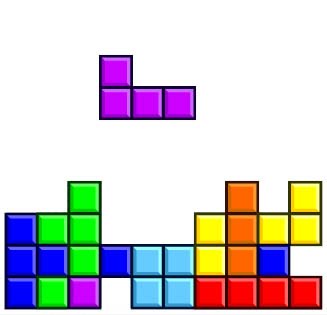
I’m intrigued and amused by the legacy of Tetris, in so many ways. It’s caught the attention of numerous scientists who study cross-entropy, artificial intelligence, and norm-based social learning. I love it for its connections to spatial abilities, as talked about here, and here, and here. Its ability to focus your mind may even help with post-traumatic stress disorder. And we even have insight into those games that end so poorly.

Tetris – the magical game.

FedEx makes cartograms of global information data

Interesting to see FedEx get into the mapping and visualization business, though not surprising because they’re active participants in a global distribution network of information.

They chose to make cartograms, a cartographic format that will confuse the uninformed casual observer of these maps but may inspire some additional learning (about mapping and about the interaction of the variables). Cartograms distort the size and shape of a mapped area (in this case, countries) on the basis of some variable. If cartograms float your boat, check out these at Worldmapper.

GIS at DePauw – model of how it can be done at a small college

I like this narrative history of how GIS can be integrated and supported on a small college campus. The investment that DePauw has made in its curriculum, personnel, and other resources is clearing paying off! For anyone interested in more about the how their MAGIS program runs, there’s a chapter from its directors (Foss and Schindler) in my 2006 book, Understanding Place: Mapping and GIS across the Curriculum. Both are faculty of classics/archaeology at DePauw.

Geographical Distributions of Language Usage

Another clever use of geocoded Tweets, to see where profanity emerges. Patterns of profanity. Profane patterns. http://cartastrophe.wordpress.com/2011/01/24/no-swearing-in-utah/

Reminds me of this version too, at the State level. Search for words, watch trends as word usage waxes and wanes. http://www.lexicalist.com/

GeoDesign redaction

I’ve just finished up two weeks of work with “GeoDesign.” Or should we call it geodesign, or geoDesign, to capture the “big” D that may be missing…

First, it was the Summit. Hosted at Esri for the 2nd year. Co-hosted by myself and Eric Wittner for the 2nd year. Which means that we coordinated submissions of lightning talks and idea labs and longer presentations, and arranged the schedule, and got to be mic’ed up for speaking on stage. Lots of work for little glory, but that’s what life’s about. It’s all for a good cause – finding effective ways to bring design practices more aligned with geographical reality and expectations, supported by the “enabling” technologies emerging today.
Then a power-house five-day workshop, directed by the inimitable Carl Steinitz. Carl was Jack Dangermond’s mentor (advisor?) as a Harvard grad student in the late 1960s and his presence still looms large on New York Street today. Carl and his posse ran a large-scale research project to explore which approaches to geodesign work well. Over 30 of us were divided into 9 different teams to pursue a common outcome through differing approaches. Specifically we worked out plans for both open space and a transit-oriented development within the city of Redlands. Fascinating experience overall, but already the results for the city seem more ephemeral than the video recorded for Carl’s research agenda.

Mapping Surnames

Here’s the first example I’ve seen of mapping surnames across the United States. Following an example in the United Kingdom too and the global version. Last summer I asked one of the developers of the UK version how conclusions overall are affected by female names changes (for those of us who have adopted our husband’s names). I mean, it’s really just a snap shot in time for last names, right? Just interesting that the UK version, indicating change over time, loses those of us whose birth names no longer register in the system…

Writing, Writing, Writing

The last few months have been unusually busy writing ones for me. Stay tuned for 2011 publications in the International Journal of Applied Geographical Research, a chapter on GIS&T in higher education in an upcoming book on that subject, a chapter on spatial cognition research in a book on geography in the 21st century, an article on new ideas for integrating spatial concepts into sequenced GIS instruction via problem solving, among other things. You’ve got to write when the muse is active…

But, still waiting for the right publishing outlet for the People’s Guide to Spatial Thinking. Sigh.