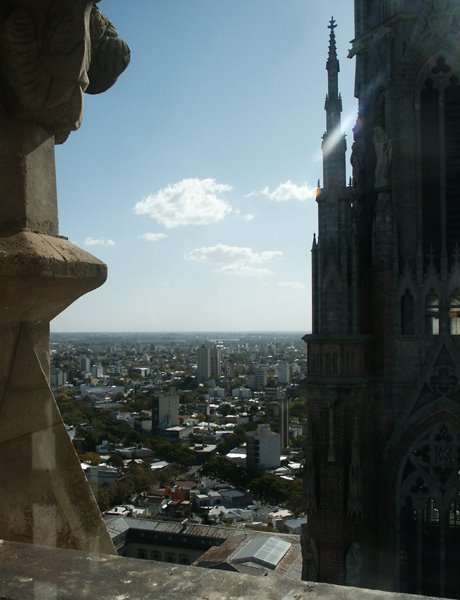
visiting La Plata


Yesterday we took the kids out of school and spent the afternoon in nearby La Plata. After many days in suburban City Bell (census says population here is 30,000 but it feels much smaller), the hustle and bustle of La Plata (almost 600,000 people) was exciting. Of course still manageable compared to metropolitan Buenos Aires (over 13 million).
La Plata was founded in the 1880s by a man named Dardo Rocha. He and his wife are encrypted in the basement of the neo-gothic cathedral that’s in the center of the city. Relatively young cathedral (towers were completed just in last decade) with nice French stained glass windows. It’s the tallest cathedral in all the Americas, higher than St Patricks in NYC and that new one somewhere in Mexico too. Or at least that’s what I think I understood from the man in the elevator, whose rapid Spanish was a challenge to non-native ears, but wikipedia concurs. From the top of the tower one can look out over City Hall and the gubernatorial buildings (the white one and the two adjacent towers); La Plata is the capital of the Provincia de Buenos Aires. It’s also known as an academic city and has a number of universities, including the national one with which Chris’s group is affiliated.
Ice cream, coffee and shopping rounded out the rest of the afternoon. Next time we’ll hit the well-known museum of natural history and some parks with good climbing trees.

Argentina 2, Day 38 – Earth Day

On Earth Day we could talk about the recent smoky air (which has cleared), the amount of electricity that an ancient refrigerator must use, the interesting biological experiment we have going on in our pool (which hasn’t been cleaned in over 6 weeks and is a massive mosquito breeding ground, in spite of the chlorine we’ve been dumping in), or what it’s been like to not drive a car for six weeks. Another fascinating topic: the attitudes and awareness of environmental issues in Argentina – how they might differ from the US, or between the rich and the poor, or more and less educated. I’ve seen people spray (bare-handed and whilst inhaling the air) small ant hills with enough strong poison to kill five cows. Likewise in the US. Mari also carefully washes out the same tiny ziplock baggie though it’s been used a dozen times (they’re remarkably expensive here). There’s a book I’ve been meaning to read for a while now, The Ecology of Rich and Poor. We’re all a bunch of contradictions, motivated by complex driving forces.
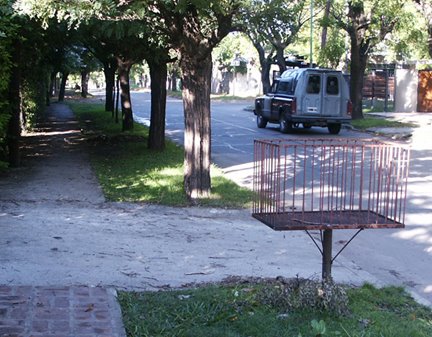
How about we discuss garbage. The bags had been hung on the tree stand with care, with visions of hungry dogs jumping high in the air. That’s the trick, putting out the bags high enough – or ensconced enough – so that a hungry dog won’t have dug out the meat bones before the truck comes by in the wee hours of the morning. Every garbage “stand” is different. Wooden, metal, plastic. Rustic, art deco, modern. Most are free-standing, some are nailed to trees, or some just are trees. Just like in the US, we carefully gather and tie up our refuse to be taken away by invisible people to some distant place. The garbage divide.
How about recycling, you ask. Nothing official. Empty wine bottles and plastic jugs can be placed on the ground below the garbage bags and sometimes the recycling elves, or young kids, whisk them away to a better life. We just read Michael Pollan’s NYT editorial on gardening and Chris has been reading The Omnivore’s Dilemma while we’ve been here. It pains us to throw away banana peels, apple cores, and spinach stems but only the flies would appreciate a few-weeks-old compost pile. Or maybe we should just make a little pile out behind the avocado tree in the back anyway.

Argentina 2, Day 37

Just blogging along. Two exciting things on the weekend: we had a marvelous lunch on Saturday with some new friends Daniela, Jorge, and their 3 daughters. Daniela’s a medical doctor who’d evaluated Emily for some physical therapy and Jorge is an editor at La Nacíon, the big national newspaper. Daniela and I had hit if off immediately when we first met and figured out, within a few minutes, that we had in common the city of Bethesda, Maryland. She and family had lived there recently for 3 years (when Jorge was in Wash DC as the foreign correspondent for La Nacíon), and Bethesda is the city where I grew up. Go figure.

For lunch we enjoyed a traditional asado: a particular sequence of meats grilled on a parilla. Usually first entraña (might be translated incorrectly as entrails; it’s some cut of meat from near the diaphragm but sometimes I find it translated also as skirt steak? My cow map doesn’t help since I don’t know where different beef cuts come from anyway; does one wear a skirt steak above or below the knees?), then chorizo (pork sausage), then asado (both a cut of meat – short ribs – and the name for the whole meal), then vacio (flank steak). Yum. Sometimes at the beginning one also eats other innards and those things with an innard type of provenance. Blood sausages, sweetbreads. Julia finds the vat of sesos (brains) at the butchers rather off-putting.

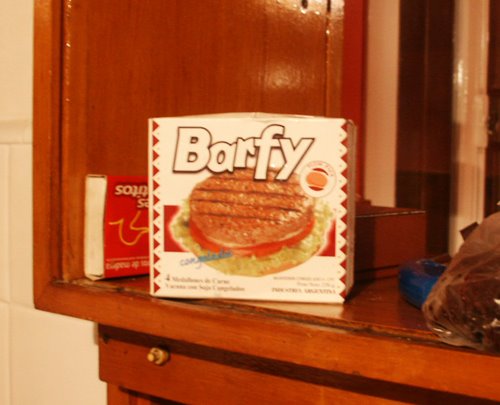
The other exciting event from the weekend? Defrosting the freezer. Chris estimates the fridge is older than we are (which would place it from the mid-1960s or before). It has a tiny (12″ by 24″) space that fills with ice, known as a poor excuse for a freezer, and since we’d moved in it had done what old-fashioned freezers do: fill with ice all around. Once there was only space for a small box of Barfy burgers, we figured it was time to pull the plug. The kids found the endeavor quite curious (having never seen one defrost one’s freezer in their short lifetimes). Thanks for executing that necessary chore, Chris.

Now that Chris is done with the bulk of his teaching we’re thinking about what kind of brief out-of-town trips we might take with the kids. I have one coming up, a few days in Mendoza with my brother who will be visiting soon. Otherwise we’re still debating. Eric and Julia consider their weekends sacred, not being big fans of school right now. They’re quite content to hang out, read books, play GameBoy, watch Spanish TV, walk around town and do errands, swing in the back yard. Recently Julia heard us discussing the option of a short trip across the river to Uruguay. Julia (who hasn’t got the foggiest notion of life across the river) retorts: “Uruguay?! I don’t want to waste a precious weekend in Uruguay!”

Hmmm. Perhaps there’s a freezer that she can stay home and defrost instead?

the camping debriefing

Mom: Eric, what did you most enjoy about camping in Tandil?

Eric: the rock climbing. We did two kinds of rock climbing, going up and coming down. The first time it wasn’t a very steep slope; we rappeled down it. The second one was a lot scarier because it was a straight-up slope, all rocky with not many hand-holds and foot-holds. The scariest part of it was going down after we had climbed up because you had to look down at the instructor to make sure that it was okay to start coming down. You had to lean back, with your feet on the mountain side.

Mom: Wow. You had a harness, right?

Eric: Yes, of course mom. We were safe.

Mom: So what else did you do? What food did you eat?

Eric: We slept in tents with about 4 people per tent. It was pretty crowded. We played a lot of games. Soccer in the field. We went on a lot of hikes. Every breakfast we had little cookies and hot chocolate. But it wasn’t very good hot chocolate. It was Nesquick and they didn’t stir it, so it was all clumped at the bottom. For lunches we had sandwiches with ham and cheese and tomatoes. For dinner we had things like chicken, rice, potatoes and meat. No vegetables. Except potatoes.

Mom: What did you do after dinner?

Eric: We took turns taking showers and then made up skits. Then we played hide and seek in the dark with flashlights. We had a bon fire and on the last night we performed our skits. I was a cupid and had to shoot pretend arrows which were really pieces of sticks. It was lots of fun.

Argentina 2, Day 34 – smoke gets in your eyes


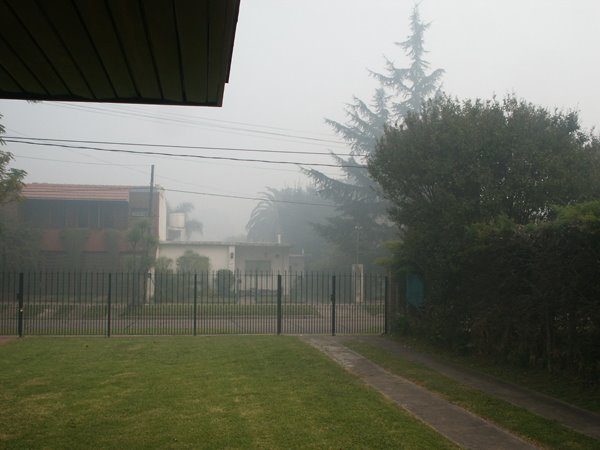
The massive agricultural strike ended; meat and milk are back on the shelves. Now the still-grumpy farmers have united in an interesting act of ecoterrorism. Hundreds of farmers synchronized their watches and agreed to all burn their fields at the same time. Traditionally field-burning is done on small scales to clear vestigal remains of harvested materials and return nutrients to the soils, but this (they say) is to clear additional land for cattle grazing now that their old grazing fields have been usurped for soybean production. The areas just happen to be directly upwind of the capital. The result? Smoke on the water, fire in the sky. I feel like I’m back in Southern California in October 2007 when the wildfires drove us indoors. The Buenos Aires airports have cancelled most of their flights today, the massive city bus station has shut down, and the PanAmerican Highway is blocked for great distances. These are pictures from our house at 8 am today, and for more info you can find stories and images from the Inter Press Service, BBC, Time, and NASA. Maternal worry of the day: I hope Eric’s asthma is under control out where he’s camping…

Argentina 2, Day 33 – home schooling


Let’s just say that my experiences in the last month have given me a new-found respect for parents who home-school their children. I know people make that decision for all sorts of reasons, some of which are much more intellectually or morally inspired than ours. We simply took the easy way out: we knew how hard it would be to find a handicapped-accessible school that was willing to entertain the idea of having a physically-disabled 8th grader, and we didn’t even try. And we were right: the school that Eric and Julia attend could not have handled Emily’s needs, from bathrooms with stalls into which her walker could not have entered to high-school curriculum with little flexibility for a non-Spanish speaker. And their school is one of the most friendly and accommodating ones. 

So Emily’s part of the RISE program, which stands for Redlands Independent Study Experience, or something like that. Each week she receives an assignment sheet detailing her tasks to be completed, and at noon each Monday spends up to an hour talking (via Skype) to a teacher who works within the RISE program (as she’s doing in this photo). Usually students participate in RISE for shorter terms (like being out for medical reasons for a few weeks) and are still local (so physically meet with their teacher once/week). Our biggest hurdles have been figuring out how to convert her written work to digital form for ease of e-mailing, since we have no easy access to a scanner. Many things she types onto her own laptop, but if it’s something that’s handwritten, such as workbook pages or tests that she’s completed, I take a picture (.jpg) of it with our digital camera, download that image to my own laptop, clean it up in Photoshop (resize, make sure it’s bright enough, etc.), convert it to a .pdf, combine all the .pdfs into one document, and email to California. It’s been taking 1-2 hours/day to manage it all (these conversions, plus answering questions, listening to all of the “discuss with your parents” topics, and communicating with California). When she returns to school on June 2, Emily immediately returns to her normal 8th grade classroom and will take her year-end final exams. And on that same day I will write a little note to the State of California thanking them for having public schools to which I can direct my tax dollars and send my children so I don’t have to home-school them anymore. Plus a gift from Argentina to Emily’s very nice and accomodating teacher in Redlands who’s never had to spend so much time figuring out trans-continental communication before!

Fifth Grade Fun

>

Eric’s class has headed south to Tandil for four days of camping. Their school prides themselves on promoting “outdoor experiences” and every grade has annual hiking and camping excursions. Parents gathered earling this morning to send off these young ones in two vans loaded down with tents, lanterns, compasses, cooking gear, and lots of warm clothing. It was 4 degrees Celcius (about 39 F) when they left, so I expect Eric will need many layers! Friends lent him a sleeping bag, foam pad, and flashlight – just the types of things that hadn’t made our packing list from home. The kids are divided up into sets of four for sharing tents and cooking their own meals. Can’t wait to hear about his adventures when he returns on Friday afternoon!

>food/marketing disconnect

>

A product (in this case, frozen hamburger patties) that might not sell so well in the States.

>Argentina 2, Day 30

>

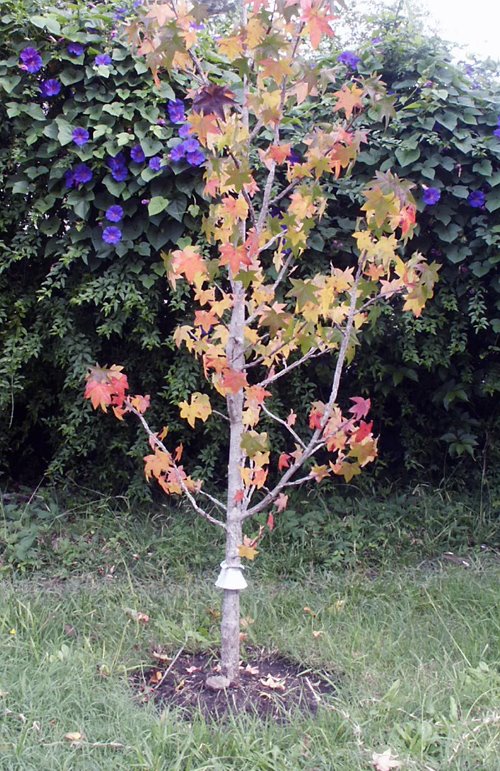
All of a sudden it became fall. Leaves have begun to change (I love how this tree stands out against the violet of the Morning Glory flowers behind it) and we figured out how to turn on the heaters. This house is a bit like a summer cabin. Drafty, with a random assortment of paperback books and only a few kitchen utensils and other modern electronic appliances. No one really NEEDS a toaster, a blender, a microwave, a dishwasher, a washer or dryer, or a vacuum cleaner. We manage quite well with our one spatula, one ladle, one wooden spoon, a broom, and of course the most important thing, our internet cable.

birthday in Buenos Aires

>

On Friday Julia and I ventured into the big capital city together. We’d decided to take the bus (8 pesos) instead of a taxi (80+ pesos) and use the extra money on shopping. Great idea, but we didn’t leave the house until around 6 pm, and it was beginning to pour rain, and we got on the wrong bus, and it was so crowded that we stood at the front for the first half-hour (trying not to have our small overnight bag hit the bus driver’s shift stick). I was never in full panic mode about being on the wrong bus. I kind of knew the general part of town where the bus would eventually end up, and it would just mean a taxi ride back to where we really wanted to be. I managed to explain the situation to a man near me (finding people near me wasn’t a problem, given the crowd) and got good info on when/where to exit to minimize the error. Then over the bus radio we heard Abba’s Dancing Queen and Cake’s version of I Will Survive back-to-back, and I knew all would be okay.


Two hours later we’d checked into our hotel and were out on the town. Big city, this Buenos Aires. I’d picked a place near the main shopping/tourist areas so there was much to look at. Living in Argentine time, we dined at 10 pm on delicious grilled chicken and steak. While we ate we watched to the side street as people sorted through TONS of plastics, cardboard, and glass and carry off the bundles on carts, bicycles, and small trucks. The unofficial recycling network of the city.


Saturday morning we were joined in the city by Chris, Emily and Eric. Spent the afternoon dining and visiting with Rachel/Gustavo/children, then night-time taxi back to City Bell in time to read a few bedtime chapters of East (by Edith Pattou) with the kids. Great book! Happy birthday, Julia.